
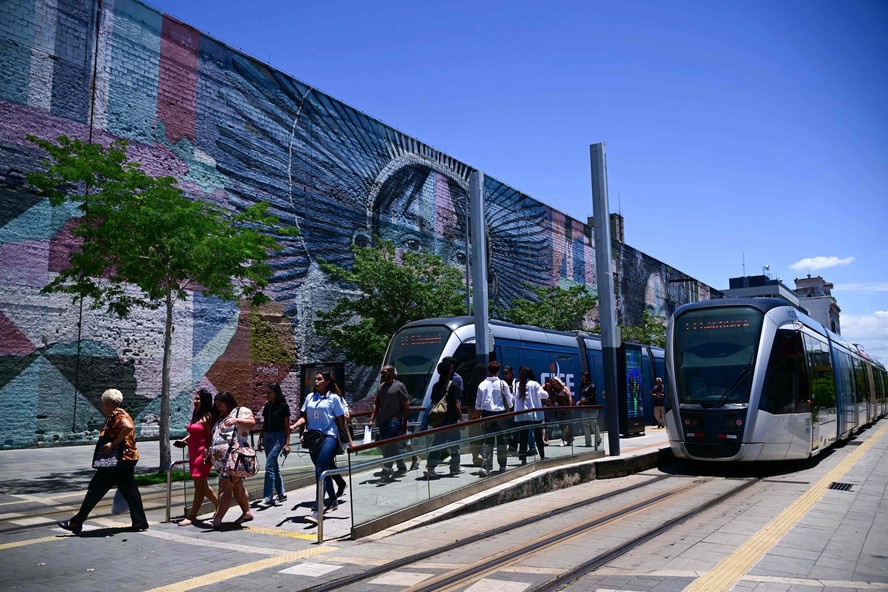


Lines and destinations
The system has four colour-coded services: Linha 1 Azul, Santos Dumont–Terminal Gentileza; Linha 2 Verde, Praça XV–Praia Formosa; Linha 3 Amarela, Santos Dumont–Estação Central; and Linha 4 Laranja, Praça XV–Terminal Gentileza. Routes share sections, so check the destination displayed on the vehicle before boarding.
The VLT is useful for travelling from Santos Dumont to Downtown, linking Praça XV with the Port Zone, or reaching Novo Rio via Terminal Gentileza. For each attraction, check the stop name and final walk: the nearest-looking station may not have the most convenient entrance.
Ticket validation and fare
The operator lists a single fare of R$5.00 and daily service from 5 a.m. to 11 p.m. VLT validation takes place before or when boarding, depending on the stop; the absence of a gate does not mean you can ride without validating. Follow station signs and validate each trip using an accepted method.
Jaé is used across the municipal network, but check current rules so you do not mistake a single-ride ticket for a payment option that allows transfers. The operator lists fares, payment methods, stops and support channels on its website.
Choosing the right stop
For Museu do Amanhã, look for the stop called Parada dos Museus; for AquaRio, check the operator’s map for the recommended stop. For the bus terminal, find which service reaches Terminal Gentileza and how to continue to the terminal. Construction or events may affect service.
At Praça XV, you can connect to the ferries. There are other connections near Estação Central, but each operator has its own fare and validation. If you have luggage, allow for the walk between terminals rather than relying only on how close they look on a map.
Frequency, safety and accessibility
The operator publishes schedules and service notices. Check for special changes, especially on weekends, during events, construction or temporary closures. Wait at the designated stop, let passengers off before boarding, and keep your belongings with you, particularly when travelling through Downtown.
The VLT runs at street level and its stops are designed to ease access, but the full walking route and nearby crossings also affect accessibility. If you need a step-free connection, check the specific stop’s status through official channels.
How I use it downtown
I find the VLT especially useful for connecting Santos Dumont, Cinelândia, downtown, Praça XV, Rodoviária/Terminal Gentileza and the Port Zone. For AquaRio and Museu do Amanhã, check the exact stop name and line before boarding.
Since several lines share sections, I do not just look for an arriving VLT: I check the line and destination. That helps you avoid ending up on a different branch from the one you need.
Paying with Jaé and validating your fare
Jaé works on the VLT with a phone QR code or card. Self-service machines at VLT stations allow top-ups by credit card, debit card or banknotes, without change. The app allows top-ups through Pix or a credit card.
An important difference from a system with traditional turnstiles is that you must properly validate your fare. I would not assume that boarding without a physical barrier means you can travel without validating your fare.
⭐ Ernestinho’s tip
To explore the Port Zone, I would combine the VLT with walking rather than book a car for each leg. Before returning to the hotel, I check the time and final connection: the VLT serves downtown very well, but not necessarily the door of your accommodation.
VLT FAQs
Do I need a physical card?
Not necessarily. Jaé lets you pay with a QR code generated in its app.
Where can I top up?
You can use the Jaé app or the machines available at VLT stations.
How do I get to AquaRio?
Check the current line and find the stop serving the AquaRio area; do not choose a vehicle just because you see it heading toward the Port Zone.
Are the VLT and metro the same?
No. They are different systems, although you can combine them on some journeys and Jaé publishes specific integration rules.
Sources and useful links
Before setting out, I check fares and service updates with the operator. Prices, schedules and payment methods may change.
Editorial review: September 25, 2026.