
Scams and charges to watch for
Information to help you stay alert while travelling without turning the experience into fear.
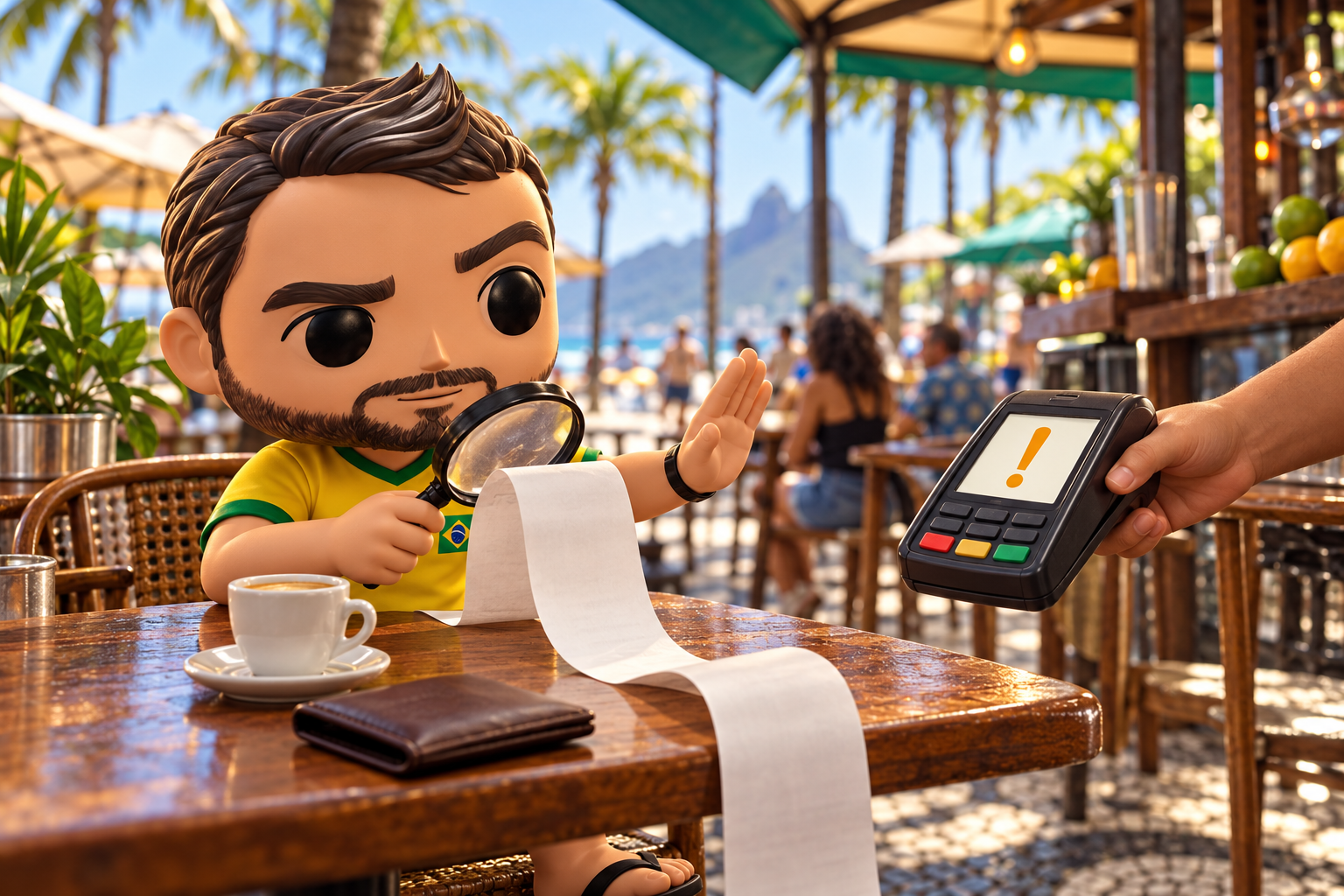
The card terminal screen
Example: You are charged R$200,00 for a R$20,00 purchase, or the screen is hidden with the excuse that sunlight makes it unreadable.
What to do: Check the amount before tapping or inserting your card or entering your PIN. In Brazil, a comma separates cents: R$20,00 means twenty reais.
Pix sent to the wrong recipient
Example: An altered QR code or an incorrectly entered payment key sends the money to someone else.
What to do: Before confirming, check the recipient's name, institution and amount. Never hand over your unlocked phone for someone to complete the process.
A surprise price at the beach
Example: You sit down and order, then charges appear that were never disclosed for chairs, umbrellas, fish or drinks.
What to do: Ask about and confirm the total price before accepting. If possible, photograph the menu or sign and keep your receipt.
A transfer without a clear price
Example: Someone presents themselves as official transport and offers help with your bags without explaining the fare, tolls or luggage charges.
What to do: Use identified service counters, authorized taxis, a verified app or a booked transfer. Confirm the destination and price before departing.
A nonexistent ticket or tour
Example: New profiles offer an implausible price, take advance payment and disappear or provide a voucher that does not match what was agreed.
What to do: Check the name, reputation, terms, date, inclusions and official channel. Be wary of pressure to pay “now”.
A different vehicle from the one in the app
Example: Someone claims to be your driver, but the license plate, model or photo does not match.
What to do: Do not get in. Check all three details in the app and have the driver confirm your name without telling them first.
Unnecessary help at an ATM
Example: A stranger gets too close, watches your PIN or claims your card has been blocked.
What to do: Cancel, put your card away and use another ATM inside a bank or mall. Never accept help from strangers.
A bill with extras
Example: The bill includes a live-music charge, duplicate items, the wrong number of diners or drinks you did not consume.
What to do: Check every line before paying. Ask in advance whether there is a music charge and whether the 10% is already included.
Fake Wi‑Fi and links
Example: A network resembling the hotel's or a booking message tries to obtain your passwords and banking details.
What to do: Confirm the exact network name, avoid banking on open Wi‑Fi and do not open links from unknown senders.
Currency exchange without clear details
Example: You are offered an attractive exchange rate on the street or at an unidentified venue, without a clear final amount you will receive.
What to do: Use clearly identified exchange offices, compare the final amount and count the money before leaving. Avoid exchanging large amounts at once.
An offer that changes on the bill
Example: A sign advertises a two-for-one offer, happy hour or combo, but the terms restrict the time, product or payment method.
What to do: Before ordering, verbally confirm which product is included, the time limit and the final price.
A fake message about your booking
Example: You receive a WhatsApp message or email asking you to pay again to avoid losing your hotel, apartment or ticket.
What to do: Do not use the link you received. Open the original platform or contact independently and verify your booking there.
A service or photo without an agreed price
Example: Someone offers to take a photo, clean something, put on a bracelet or provide a service, then demands an unexpected payment.
What to do: If you do not want it, say no before accepting. If you do, agree on the total price before it starts.
If something has already happened
Example: You were charged incorrectly, lost documents or experienced a crime.
What to do: Save screenshots, receipts, the license plate, time and address; block your cards and file a police report. Emergency: 190. DEAT and BPTur provide tourist assistance.
My simple rule: agree on the price and what is included before accepting a service, check menus with prices, and use transport options that let you identify the driver and destination. If an offer pressures you or changes its terms at the last moment, you can decline and walk away calmly. Keep messages and receipts if a charge is disputed; if you are in immediate danger, go to a staffed place or call emergency services.