
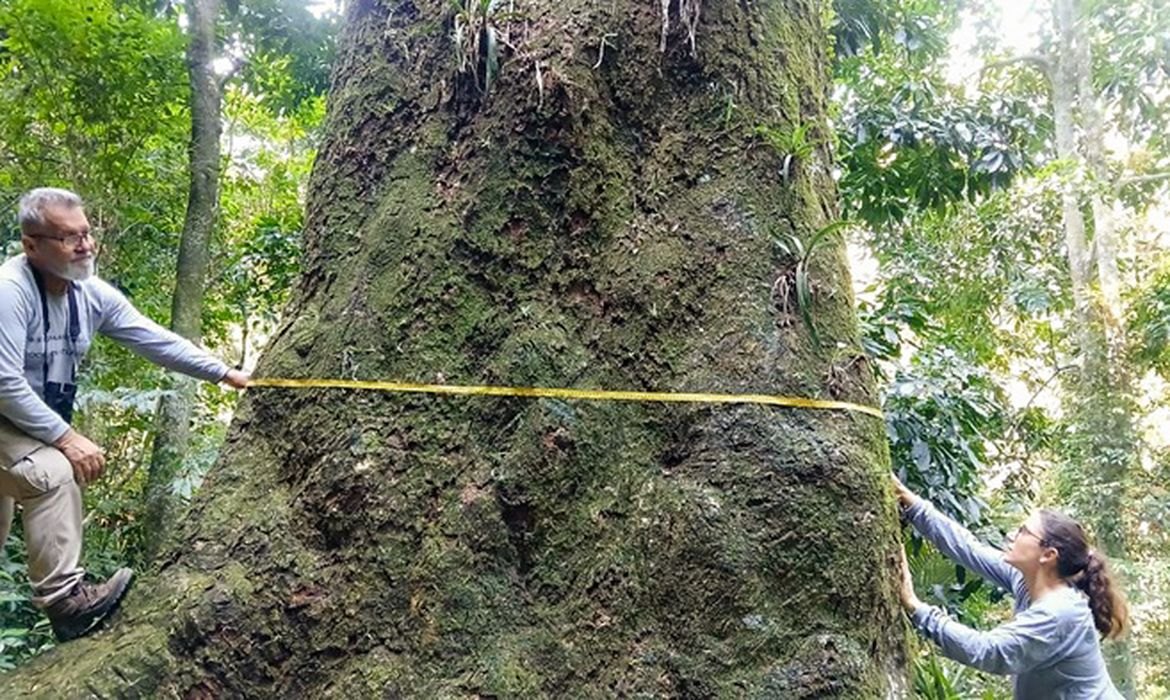
My take on the place
Territorial material from Rio da Prata identifies the Jequitibá Centenário as a landmark on the so-called Roteiro do Jequitibá. The route connects it with farming, rural paths, Cachoeira do Engenho and Mirante da Mesa. I value this wider perspective: the tree is part of the landscape and community’s story, not an isolated attraction in the forest.
An old tree can provide shade, shelter and food for other organisms, and form part of the forest’s structure. These are general ecological roles of long-lived trees; without a documented assessment, I do not assign wildlife species, measurements or a conservation status to this particular tree.
Centenário does not mean an exact age
The territorial name found in the material is “Jequitibá Centenário”. It signals a local reference to the tree’s age, but does not prove that the specimen is exactly one or two hundred years old. Its botanical species, height, circumference, diameter and health remain to be confirmed.
There is another distinction to preserve: the Transcarioca lists a “jequitibá bicentenário” among Section 05’s attractions, while local Rio da Prata material uses “Jequitibá Centenário”. We do not yet know whether they are the same tree with different age estimates or two separate specimens. I keep the references separate until botanical and local verification is available.
Access and hours
This is not an urban tree with direct public access. Its precise location is not published here because access, the tree’s identity and authorization must first be confirmed. If a guided, authorized activity is available, check the meeting point, permitted route, hours and duration with park staff and the local organizer.
I suggest a morning visit only as part of a confirmed outing with local guidance. Do not treat a park sector’s general hours as permission to enter private property or use private rural roads. If you cannot confirm access, enjoy Rio da Prata’s public scenery and save the tree for an organised visit.
General map, not the tree’s coordinates
This page’s map shows general access to Rio da Prata, not the Jequitibá’s location. It helps place the park sector and plan travel to the area; it is not final navigation. Third-party tracklogs also do not establish a right of way or permission to visit.
How to approach with care
If an authorised visit brings you near the tree, do not climb the trunk, remove bark, attach objects or repeatedly step on its roots. Avoid fire and respect crops, homes, boundaries and community privacy. During lightning storms or strong winds, do not remain under large trees; change plans and follow local guidance.
What to combine it with
The tree can be understood alongside Rio da Prata’s rural landscape, family farming and Pedra Branca State Park guides. Cachoeira do Engenho and Mirante da Mesa are connected to the same territorial corridor, but that does not mean there is a continuous public visit between all three places. Combine them only through a confirmed route with authorised access and timing.
Further reading
The territorial material consulted provides context for the Roteiro do Jequitibá. The Trilha Transcarioca confirms that Section 05 includes a bicentennial jequitibá; whether it is the same specimen as Rio da Prata’s remains unresolved.
Official Section 05 guide → · Pedra Branca State Park on INEA →