
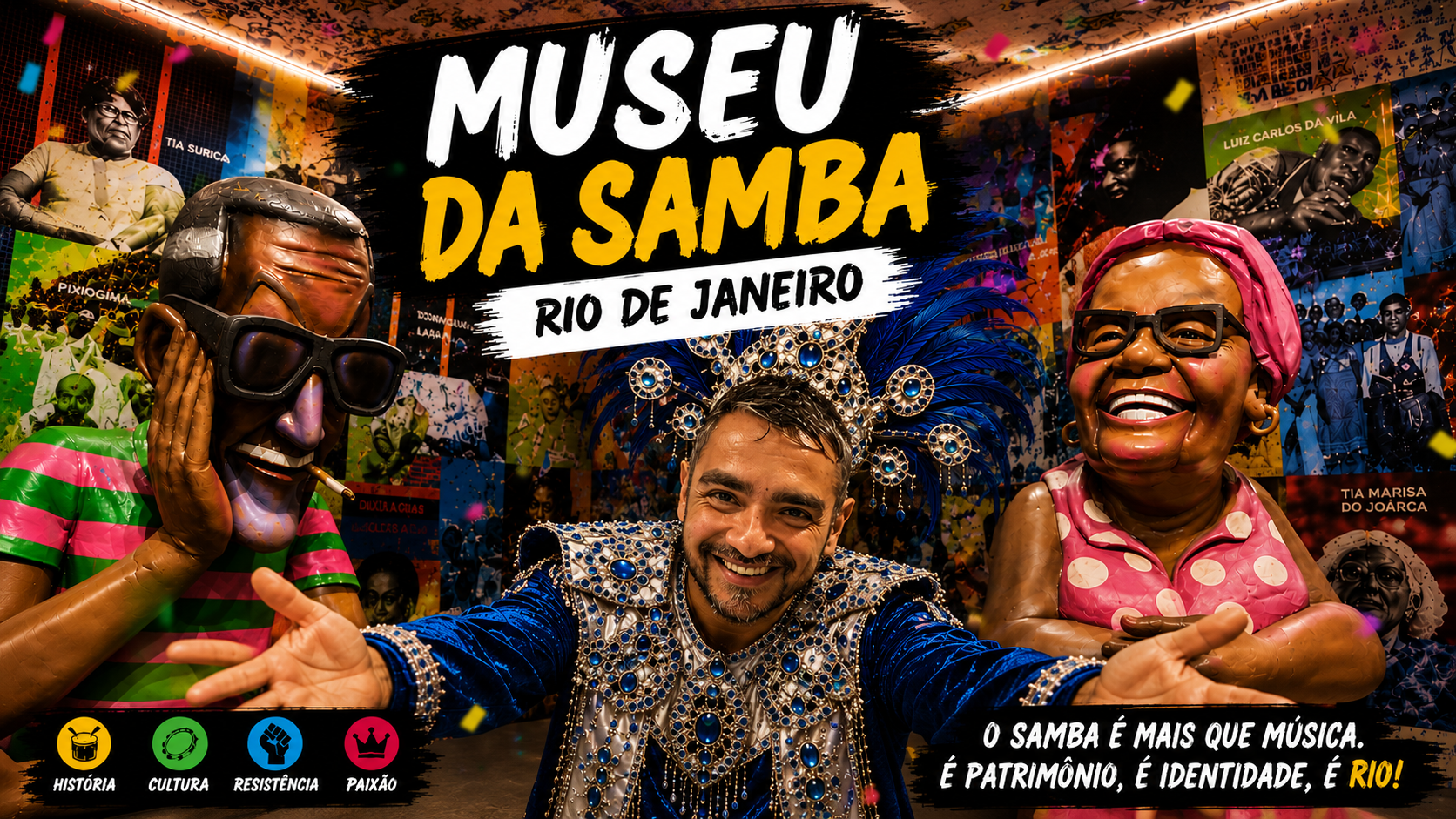
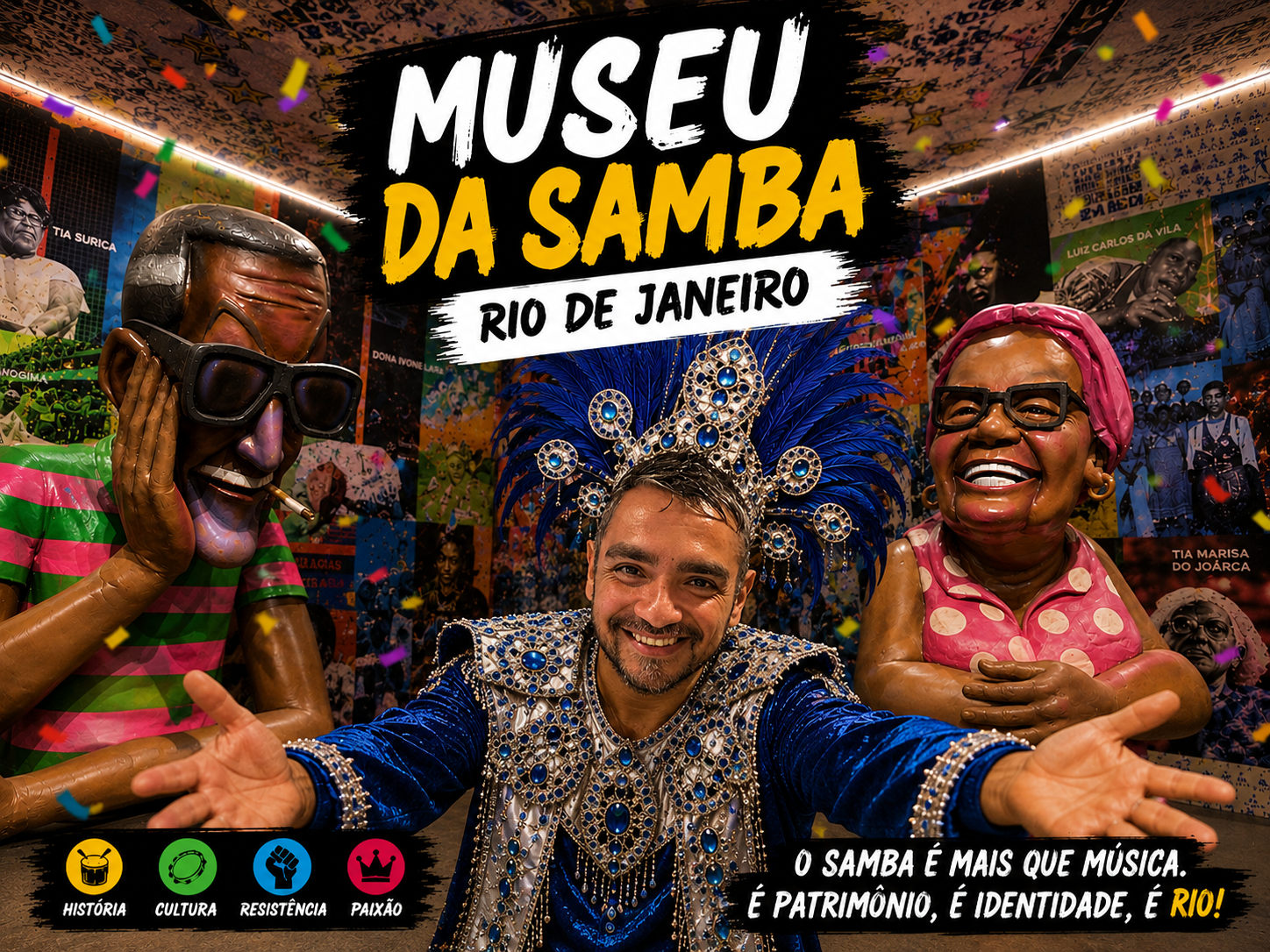
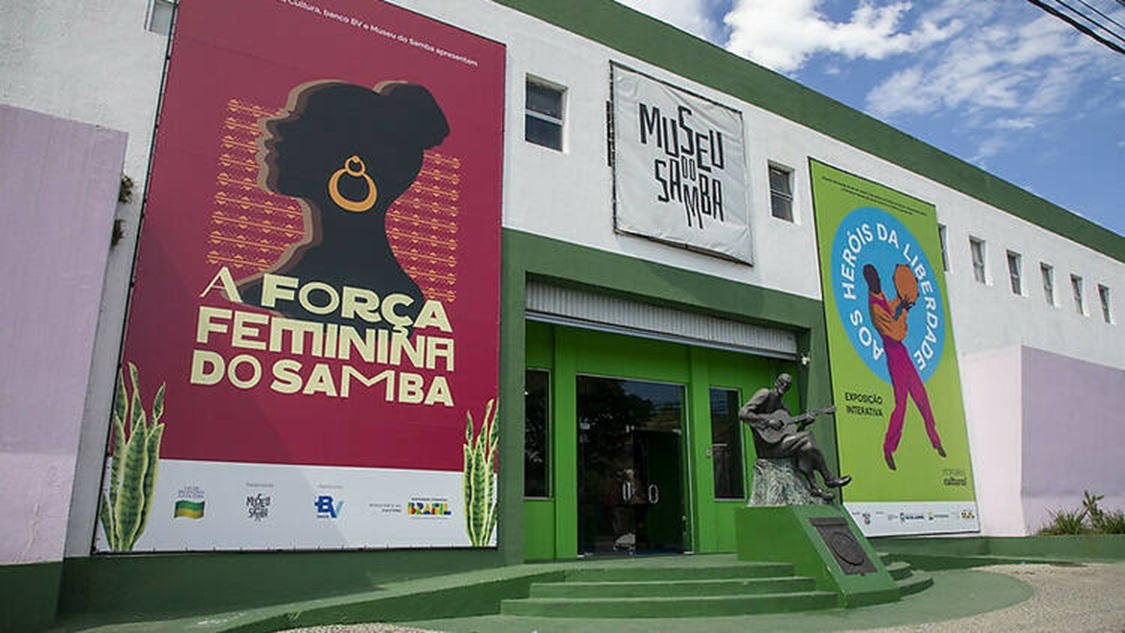
Museu do Samba is a memory center preserving and sharing samba history. Located in Mangueira, near one of Rio Carnival's most symbolic areas, it brings together testimonies, photographs, objects, music and experiences connected with composers, performers, communities and samba schools.
Samba, oral history, Mangueira, Carnival, Afro-Brazilian culture and community leadership.
What you will find
Historic photographs. Testimony from samba musicians. Music and audiovisual records. History of samba schools. References to Cartola and Dona Zica. Mangueira memory. History of the baianas. Objects related to Carnival and samba. Guided visits. Cultural activities according to the program.
What you may not know
It is in the Mangueira neighborhood. It is near the Estação Primeira de Mangueira rehearsal venue. It preserves testimony from important samba musicians. It highlights Black communities as protagonists. It works with education, research and oral history. Rio samba is part of Brazil's cultural heritage.
History
The museum grew from initiatives in Mangueira to preserve the memory of communities connected with samba. Its location is no coincidence: the neighborhood is linked with composers, performers and Estação Primeira de Mangueira.
More context
The institution presents samba as a cultural expression born mainly in Black communities and built through gatherings, resistance, celebrations and oral transmission.
Mangueira, Cartola and Dona Zica
Mangueira is linked with key figures including Cartola, Carlos Cachaça, Dona Zica, Nelson Sargento, Delegado and Dona Neuma. Their stories show how samba developed in homes, terreiros, streets and gatherings before reaching major stages.
More context
Being close to Palácio do Samba and the community makes the visit an opportunity to understand Carnival in the area where it is prepared throughout the year.
History told by those who lived samba
One of the museum's most important assets is testimony from samba musicians. Interviews, recordings and accounts preserve memories that could disappear if left unrecorded.
Much more than Carnival
The visit shows that samba goes beyond parades. There are different styles and ways of playing, composing and dancing, along with connections to religion, work, community life and the fight against racism.
Women in the making of samba
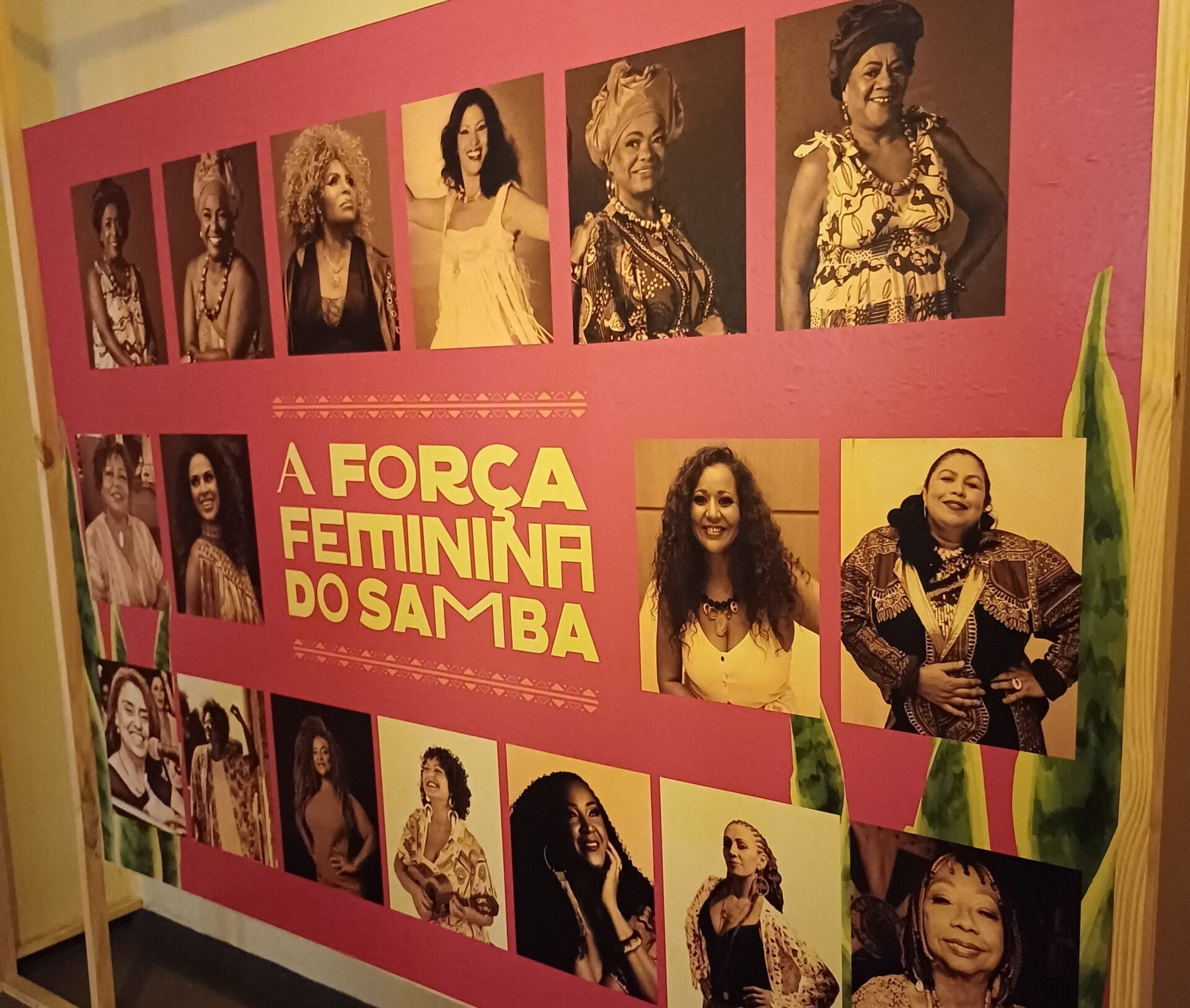
Baianas, composers, performers, seamstresses, leaders and organizers played fundamental roles. The museum brings visibility to women who received less recognition for a long time.
A center for reference, research and education
Beyond its exhibitions, Museu do Samba develops research, guided visits, educational activities, gatherings and projects to safeguard samba as cultural heritage.
Why is it worth visiting?
It is a chance to discover samba beyond the more commercial images of Carnival and hear from the communities that built this culture.
My tip
Try to take a guided visit. Here, the stories people tell enrich the experience far more than simply looking at objects. Arrange your outward and return transport carefully.