
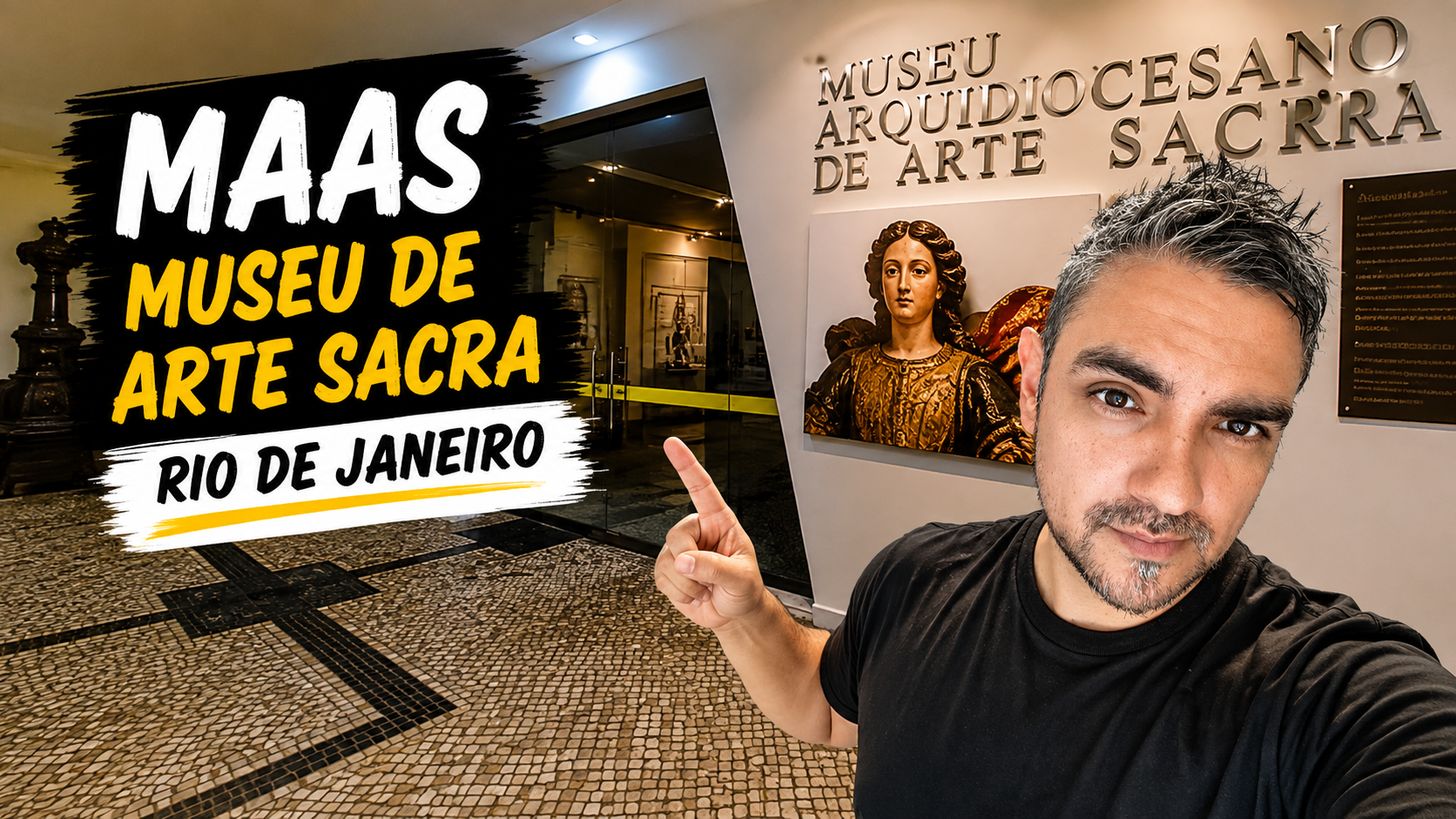
Museu Arquidiocesano de Arte Sacra is in the basement of Catedral Metropolitana de São Sebastião. Its collection brings together paintings, sculptures, religious images, liturgical clothing, devotional objects, documents and pieces related to the Catholic Church’s history in Rio de Janeiro.
Sacred art, colonial pieces, liturgical objects and Rio’s religious history.
What you will find
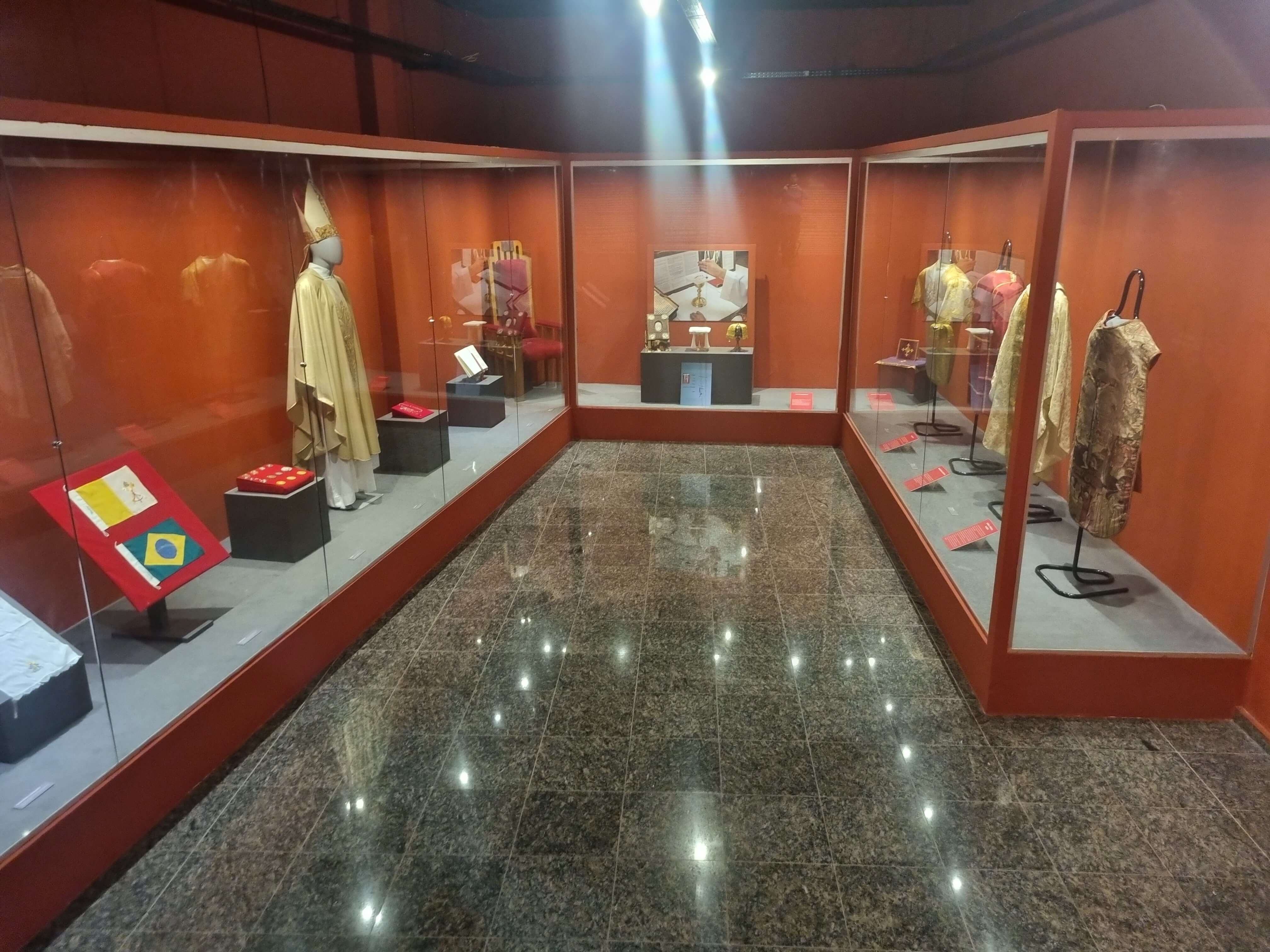
Religious sculptures and images. Sacred paintings. Chalices and liturgical objects. Religious clothing and vestments. Historic documents. Galeria de Quadros Helena Pavão. Museu Bíblico. Objects related to the archdiocese’s history. Colonial and imperial pieces. Access to the Metropolitan Cathedral’s interior.
What you may not know
The collection began forming around 1950. The museum opened to the public in 2001. It is in the Metropolitan Cathedral’s basement. Many visit the cathedral without discovering the museum. The collection records centuries of Catholic presence in Rio. In 2026 it celebrated 25 years of public opening.
History
The museum’s formation began around 1950, when Father Ivo Calliari started collecting pieces at Cardinal Dom Jaime de Barros Câmara’s request. The aim was to protect historic objects from churches, chapels and religious institutions.
More context
Over time the collection grew to represent different periods of Catholic presence in Rio, from colonial times to more recent eras. The museum officially opened to the public in 2001.
A museum hidden beneath the Metropolitan Cathedral
One distinctive feature is its location in the Metropolitan Cathedral’s basement. Many tourists visit the cathedral without knowing a sacred-art collection lies beneath the large conical building.
More context
The visit presents two different architectural and artistic languages: the modern Catedral de São Sebastião and the museum’s historic pieces.
Religious images, paintings and liturgical objects
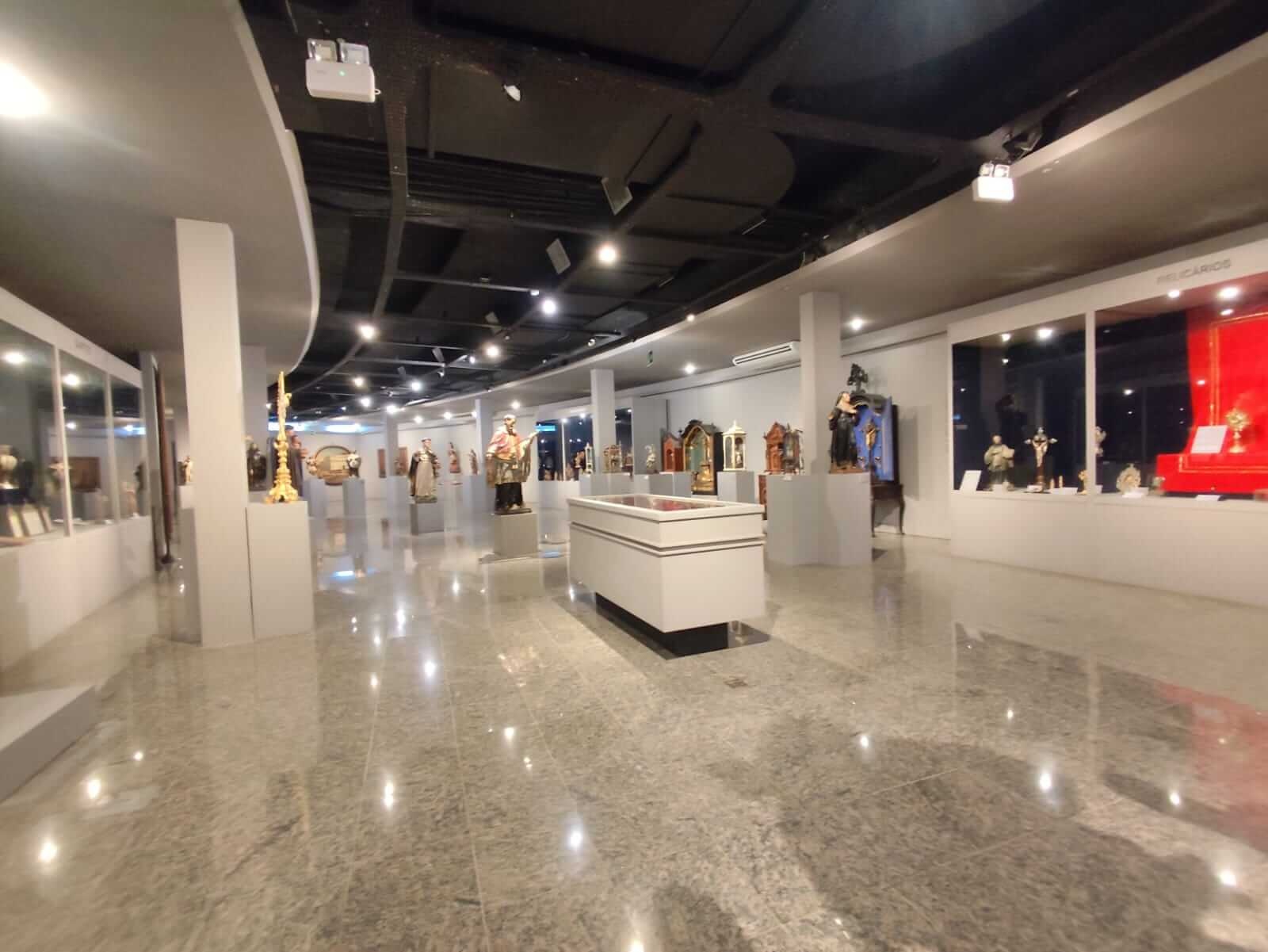
The collection includes religious sculptures, paintings, chalices, monstrances, crucifixes, documents, books, clothing and ceremonial objects. Several pieces reveal the work of artists and craftspeople from different periods.
Religious history and the city’s transformation
Churches participated in the social organisation of colonial and imperial Rio. Their objects reveal religious practices, celebrations, brotherhoods and figures that shaped the city.
Galeria Helena Pavão and Museu Bíblico
The visit may include Galeria de Quadros Helena Pavão, spaces dedicated to paintings, religious vestments and sacred clothing, as well as Museu Bíblico. Availability may vary with the programme.
Preserving pieces from historic churches
The museum preserves works and objects that could deteriorate or disappear. It also documents the history of Rio’s parishes, congregations and religious authorities.
Why is it worth visiting?
It is a little-known, inexpensive visit easily combined with the Metropolitan Cathedral, Arcos da Lapa, Escadaria Selarón and other Centro attractions.
My tip
First observe the Metropolitan Cathedral from the centre of the building and look up at its stained glass. Then go down to the museum. Combine it with Arcos da Lapa and Escadaria Selarón.