
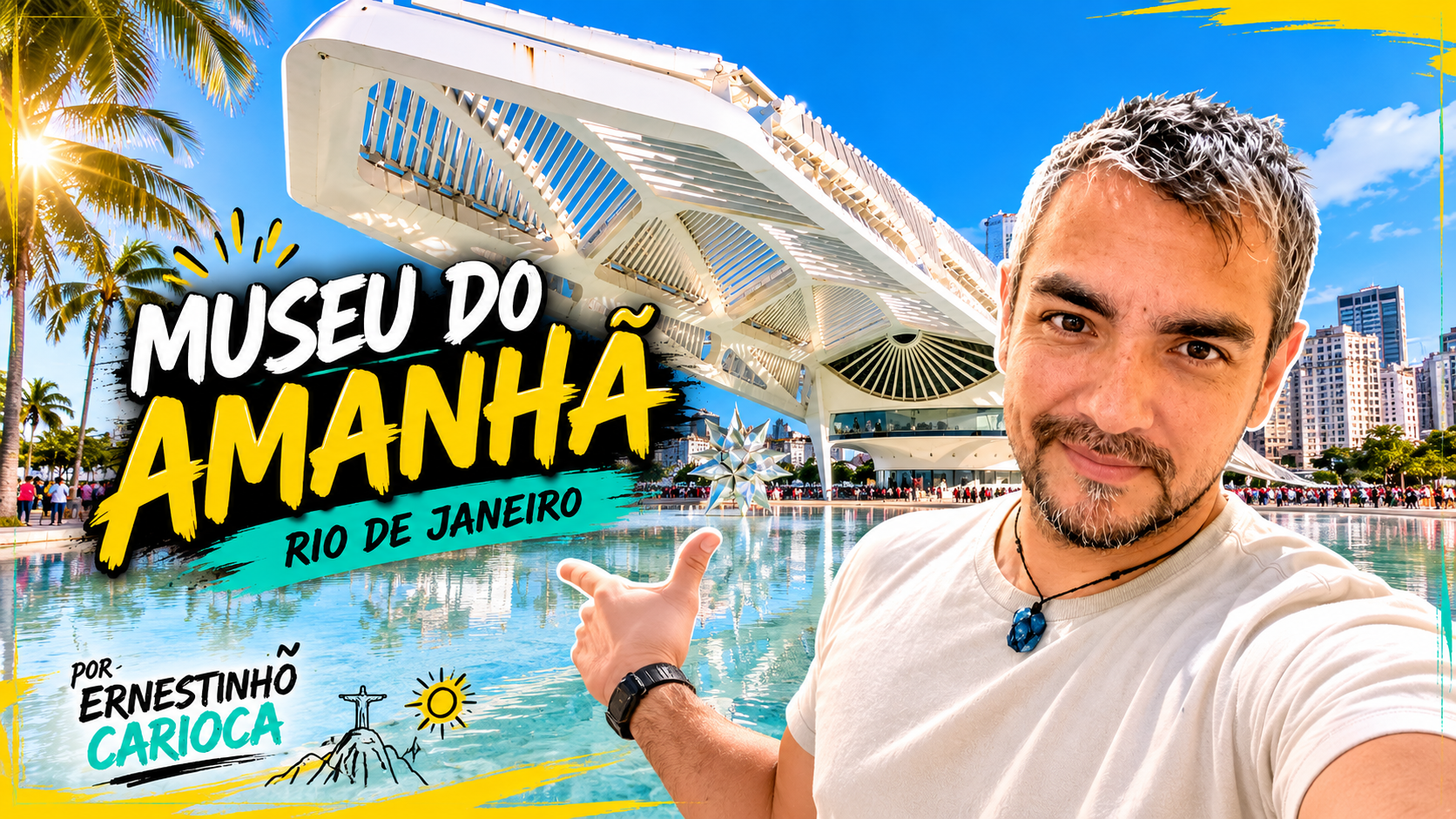
Museu do Amanhã is a different kind of science museum. Rather than predicting a single future, it invites reflection on today’s decisions and their consequences for the planet, society and future generations.
Science, sustainability, interactive experiences and one of Rio’s most famous examples of contemporary architecture.
What you will find
Main exhibition about the universe, Earth and humanity. Projections and audiovisual experiences. Interactive installations. Topics covering climate change and biodiversity. Discussions about cities, technology and society. Temporary exhibitions. Audio guides for different audiences. Gardens and reflecting pools. Views of Guanabara Bay. Café, shop and services subject to availability.
What you may not know
It opened in December 2015. It was designed by Santiago Calatrava. Its exhibition does not try to predict the future. The main route is organized around five major questions. The movable roof structure follows the sun’s movement. The museum has no parking of its own.
History
Museu do Amanhã opened in December 2015 as a major project in the port area’s transformation. Its creation helped return Praça Mauá to pedestrians and turn the area into one of Rio’s most visited cultural districts.
More context
Its approach combines science, technology, philosophy, art and audiovisual experiences. The museum explores questions about the universe’s origins, life, humanity and the futures we can build.
Santiago Calatrava’s architecture
Spanish architect Santiago Calatrava designed the building. Its white forms, movable structures and lines inspired by natural elements became a new image of the city.
More context
Gardens, reflecting pools and public spaces beside Guanabara Bay surround the building. Its relationship with the sea and landscape is part of the experience.
From the Cosmos to Us
The main exhibition unfolds through a sequence of questions: where do we come from, who are we, where are we, where are we going and how do we want to get there? Projections, screens, installations and scientific information guide the visit.
The Anthropocene and today’s decisions
A central concept is the Anthropocene: an era in which human activities have effects on a planetary scale. The museum addresses climate change, biodiversity loss, urban growth, inequality and resource consumption.
There is no single tomorrow
The final message is that the future depends on collective and individual decisions. Sustainability and coexistence emerge as fundamental values for imagining different ways of living.
Temporary exhibitions and new experiences
In addition to its main exhibition, the museum hosts temporary shows, educational activities, debates, sensory experiences and programs about science, society and the environment.
Science accessible to different audiences
The museum offers audio guides, facilitated visits, visual narratives, a sensory map and self-regulation kits for neurodivergent visitors or those with hypersensitivity.
Why is it worth visiting?
It is one of Rio’s best-known contemporary buildings, offering an interactive experience especially appealing to families, students and anyone interested in science and the environment.


My tip
Bring a light jacket, as the air conditioning can be strong. Go early and leave time to walk around Praça Mauá and photograph the building.